Chassis No. 0202A. 1 of 24 Ferrari 340 America chassis built. Driven to 5th Place finish in the 1952 24 Hours of Le Mans by Andre Simon and Lucien Vincent. Meticulous build and restoration by the Ferrari Classiche Department in Italy. Classiche Red Book with White stripe, denoting significant racing Ferrari. Provenance verified. Extensive racing history throughout the U.S. in the 1950s. Vignale coachwork. Finished in period-correct French Racing Blue No. 14 livery. 4.1L V-12 engine. 4-speed manual transmission.
Chassis No. 0202A is the ultimate barn find. Drag racer Mike Sanfilippo purchased the remains of the car in 1990 for $200. After originally planning to cut up the chassis to make a Hot Wheels-type dragster, Sanfilippo thought better and the car sat undisturbed for years. He had no idea that beneath the battered bodywork lay the bones of a precious race Ferrari.
Automotive restoration expert Tom Shaughnessy purchased what was listed as a vintage Devin sports car on eBay for $26,912. After extensive restoration the car is worth millions. In 2016 Bonhams offerred Chassis No. 0196A with an estimate of $7.5. The car high bid to $3.1m at Mecum.
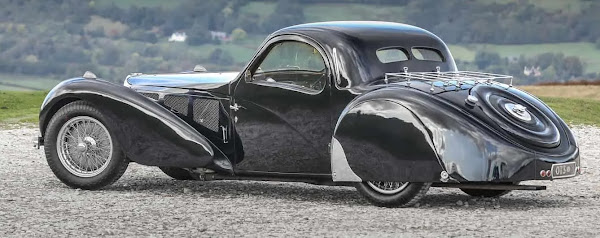
The Atalante was a two-door coupe body style similar to and built after the Atlantic, both built on the 57S chassis.
Only 17 Atalante cars were made, four of which reside in the Cité de l’Automobile Museum in Mulhouse, France. One of the most aerodynamic and beautiful of Bugatti’s Type 57 variants, the car was capable of 125 mph with its 3.25-liter inline-8 that produced an unheard of 175 hp. The Type 57S is equipped with a Marshall K200 supercharger, 4-speed manual gearbox, and 4-wheel mechanical drum brakes.
The engine on chassis 57502 was fitted with a supercharger by its second owner. This gave it a mind-boggling 220 hp.
The Type 57S is one of the most sought-after of all Bugattis.
This 1937 Type 57S Atalante sold for £7,855,000. ($10,179,000)
These cars don't appear for sale often. When they do the price is over $10m. In 2009 a rare, unrestored 1937 Bugatti Type 57S Atalante Coupe was found decaying in the garage of a British doctor. He died in 2007, and reportedly had kept the vehicle parked in his garage since the early 1960s and hadn’t driven it in five decades. A month later the car sold at a Paris auction for some $4.4 million.
The Monkeemobile is a modified Pontiac GTO that was designed and built by Dean Jeffries for The Monkees, a pop-rock band and television program. Two cars were built, one for the television program and the other as a promotional car. The TV car followed the Monkees on tour and was left in Australia in 1968. It later resurfaced in Puerto Rico as a hotel courtesy car.
It was sold at government auction in 1992 for $5,000 when the hotel went out of business. It was last in the hands of a collector in New Jersey.
The show car was purchased by George Barris. He displayed the car for promotions at many events across the US.
In 2006 the car was restored. Barris sold the car through Barrett-Jackson in 2008. It made $360k.
42,229 miles. 1 of only 10 produced in Sunflower Yellow.
350/360 HP LT1 V-8 engine.
Muncie 4-speed transmission.
12 bolt rear end with 4.10 gears.
Power brakes.
Black bench seat interior. The Yenko Chevy Nova for 1970 used the LT1 found in the Corvette LT1 and Camaro Z/28. Even with the high-compression 350 cubic-inch LT1 engine, producing 360 horsepower, the Yenko Deuce managed to skate under the performance car insurance premium. 175 Chevy Nova Yenko Deuces were produced, 122 four-speeds, and 53 automatics. The final 50 of the Yenko Deuce were sent to Hurst for final assembly, and are noted by an “H” in their VIN.
The 1970 Nova Yenko Deuce could be ordered through Chevrolet’s COPO program with the new 350/360 HP LT1 V-8 and a number of other performance options. It was an end-run around the insurance companies. New buyers could report, truthfully, the purchase of a 350-powered Nova. It seemed on paper like any other family car and qualified for coverage with a reasonable premium. The truth was the economy car packed a monster 360 hp engine.
Yenko Deuces started as base-level Novas with bench seat interiors. Most paired the LT1 with a close-ratio Muncie 4-speed transmission and heavy-duty clutch. Through the COPO program Yenko also ordered heavy-duty suspension components and 4.10-geared 12-bolt rear ends. The Yenko dealership and other shops finalized the conversions with Yenko-specific stripes, special Yenko-branded interior trim and aftermarket wheels and tires. This example made $151k at Mecum.
370 miles were showing on the odometer in 2021. The Yugo suffered from a reputation for non-existant workmanship and is generally recognized as the worst car ever made. Many Yugos began falling apart immediately after leaving the showroom. The car became the brunt of jokes, with it's greatest asset said to be it was light and easy to push after breaking down. Unknown who in their correct mind buys a Yugo with a view to a future collector car, but here we have it. 1990 was the beginning of the end for the Yugo in America. The Yugo disappeared from the US market forever in 1992. 6,359 Yugos were built in 1990, with no notion as to how many convertibles might have been.
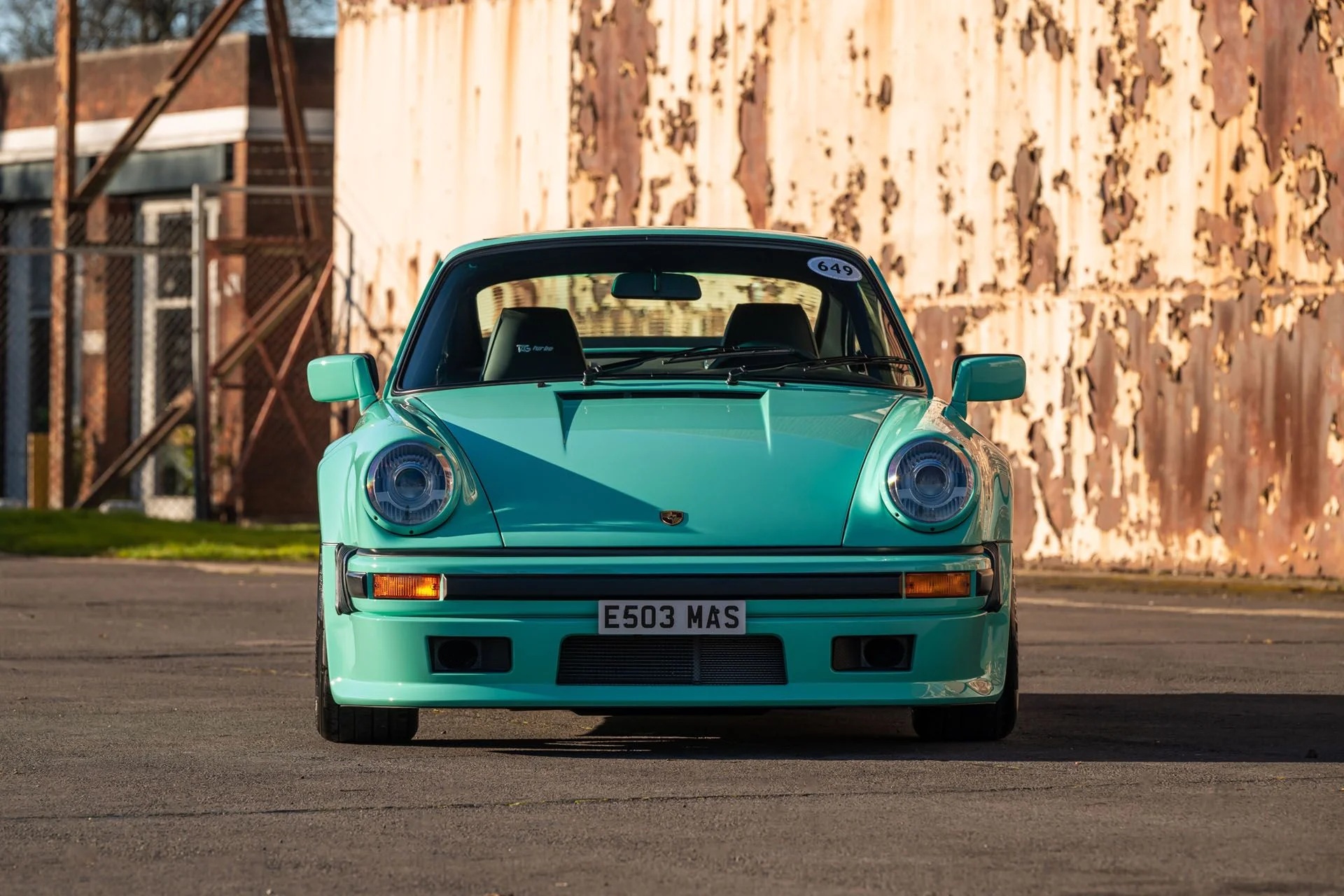
One of 11 Porsche 911 TAG Turbos built by Lanzante—offered with less that 300 miles since completion. Powered by the 1.5-liter TAG Turbo “TTE P01” V6 F1 engine developed by Porsche, rebuilt by Cosworth. Engine raced by four-time Formula World Champion Alain Prost at 1986 German Grand Prix and the 1987 Hungarian and Japanese Grands Prix.
Carbon fiber body panels, carbon ceramic brakes, coil-over suspension, alloy door skins, and 17-inch aluminum wheels from RUF.
Custom ordered finished in Mintgrün (Mint Green) over Black leather interior with Blue/Green tartan cloth seat inserts.
Based on a left-hand-drive 1988 Porsche 911 Turbo, the car was transformed by Lanzante to create this one-of-a-kind machine named “AP87” after its 1.5L TTE engine (serial number 051). It is equipped with a six-speed manual transmission featuring custom gear ratios, a twin-plate hydraulic carbon clutch, and an Inconel exhaust system with titanium tailpipes. This Lanzante 911 TAG Turbo represents a rare opportunity to own a hand-built, Formula One-powered Porsche. The car is accompanied by its original build specifications, purchase paperwork, and exclusive delivery items—including a laptop for Cosworth and PDM control modules, a custom car cover, a charger, and a bespoke watch.
The car is offered for private sale of £2,200,000. Here.
52,994 kilometers. 1 of 762 produced between 1967-1973.
1 of only 6 examples finished in Verde Miura.
Restoration completed in 2011 by marque experts Bobileff Motorcar in San Diego, California.
Displayed at the 2011 Concorso Italiano.
Chassis no. 3685.
Engine no. 30491.
3922cc transverse-mounted V-12 engine rated at 370 HP.
Four Weber carburetors.
5-speed manual transmission.
4-corner independent double wishbone suspension with coil springs and shocks.
Girling 4-wheel ventilated disc brakes.
The Miura is considered one of the most beautiful and influential sports cars ever made, making it a highly desirable collector's item. The more refined 'S' versions even moreso. The car was the first high-performance production road car with a rear mid-engine, rear-wheel-drive layout, which has since become the standard. Lamborghini's flagship, the Miura received periodic updates and remained in production until 1973. A year later the Countach entered the company's lineup.
A 3.9-liter V12 engine produces around 370 horsepower through a 5-speed manual gearbox. This example appears at Mecum.
6 years ago RM Sotheby’s made auction history when a 1962 Ferrari 250 GTO, chassis no. 3413 GT, long considered to be the ‘holy grail’ of the collector car world sold for $48.4 million, becoming the most valuable car ever sold at auction. The car hammered for $44mil + auction house fee (usually 10% of the final bid). The numbers-matching GTO was offered with its original engine, gearbox, rear axle and factory Series II body.
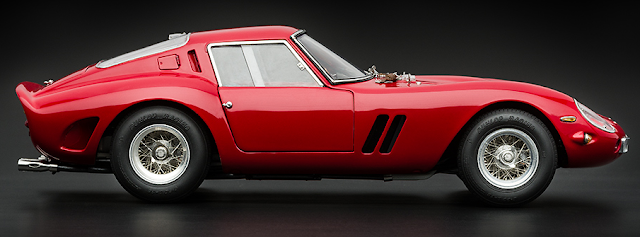
The Ferrari 250 GTO is a racing car produced from 1962 to 1964. A total of 39 250 GTOs were manufactured. (Gran Turismo Omologato, grand tourer homologated) which means officially certified for racing in the grand tourer class. In 2004, Sports Car International nominated it the top sports car of all time. Motor Trend Classic placed the 250 GTO first on a list of the "Greatest Ferraris of All Time." Popular Mechanics named it the "Hottest Car of All Time."
In 2012 the 1962 250 GTO made for Stirling Moss became what was then the world's most expensive car in history, selling for $35m.
The 250 GTO was designed to compete in GT racing. The car was built around a hand-welded oval tube frame, incorporating A-arm front suspension, rear live-axle with Watt's linkage, disc brakes, and Borrani wire wheels. The highly reliable engine was the Tipo 168/62 Comp. 3.0 L V12.
The engine was an all-alloy design utilizing a dry sump and six 38DCN Weber carburetors.
The world record for a car at auction was broken for the fifth time in six years on August 14, 2014 when a 1963 Ferrari 250 GTO sold at Bonham's Quail Auction for US$34,650,000 (US$38,115,000 including buyers premium).
The car sold from the Maranello Rosso Collection was stamped with chassis number ‘3851 GT’ and was the 19th 250 GTO Berlinetta made by Ferrari, completed on Sept. 11, 1962.
The car was delivered to the leading French racing driver Jo Schlesser, co-driven by himself and French ski Champion Henri Oreiller in the 1962 Tour de France Automobile race.
Oreiller later crashed the car during a race at Montlhery Autodrome, south of Paris, and died of his injuries in hospital. A newspaper report at the time said the Ferrari careered off the track and flipped twice after a tire burst.
The car was repaired by Ferrari in Italy and was sold to Italian driver Paolo Colombo in time for the start of the 1963 competition season.
In 1965 young Fabrizio Violati, the scion of a wealthy Italian family, bought the car. “I saved the car from scrap and hid it from my parents. I only drove it at night so nobody would see me”
Lancia used the Turin Motor Show in 1950 to officially introduce the Aurelia. Unremarkable at a glance, the new car hosted advanced technology, including front and rear independent suspension, inboard rear brakes and a new 1.8-litre 60-degree alloy V-6 engine of 125 hp that would become the world’s first volume-produced V-6. The race-derived 2,451cc OHV unit with hemispherical heads was available with one or two carburetors.
The Aurelia was built in six generations through 1958, increasingly refined with each evolution. The open top debuted in 1955 with the B24 Spider America. Lancia built 240 examples of the B24 spider through late 1955, with 181 cars specified as the B24S, the ‘S’ (for sinistra, Italian for ‘left’) denoting left-hand drive. The 4-speed manual transaxle combined with sliding pillar fully independent front suspension and De Dion rear suspension allowed for excellent weight distribution.
A 1955 Lancia Aurelia B24S Spider America project. Coachwork by Pinin Farina. It made £319k at a Bonhams auction in 2022. Hagerty suggests a top end 1955 Lancia Aurelia B24S Spider America is trending around $1.3m


 The engine on chassis 57502 was fitted with a supercharger by its second owner. This gave it a mind-boggling 220 hp.