Monday, December 9, 2019

1971 Hemi Cuda convertible - $3.5m

The 1970 Plymouth Barracuda and Cuda were selling well in that year with 50,617 cars sold. Buyers went AWOL in 1971, when Chrysler sold just 16,159. Of those, 108 were Hemi Cuda coupes and 11 were Hemi Cuda convertibles. Only two of the convertibles were sold with 4-speeds. This blue car is one of the them.

In 2014 it became the most expensive Mopar ever sold at auction when it made $3.5m.
The car was restored in 2000. Once owned by Broom Hilda cartoonist Russell Meyers, it was sold to its next owner for $250,000. It was later confiscated in a drug raid and subsequently sold at auction for $405,000.
Writers of the time made comments. “There is nothing politically correct, nothing socially responsible about a Hemi ‘Cuda. The 1971 Plymouth Hemi ‘Cuda convertible is wretched excess in a nearly unimaginably limited production package.”

It is the ultimate portrayal of the ultimate muscle car. Original list price‎ was ‎$4,348.

Friday, December 6, 2019

2019 Aston Martin DBS Superleggera

Aston Martin unveiled the most powerful regular production car the company has ever offered last fall. The Aston Martin DBS Superleggera is powered by a 715 hp turbocharged V12 engine. The DBS Superleggera is a Grand Touring car, not a race car. That means emphasized refinement and comfort along with the raw performance.

The car goes from zero to 60 mph in a little under 3.4 seconds on the way to a top speed of 211 mph.
The DBS Superleggera only rivals are the likes of the Ferrari 812 Superfast and Mercedes-AMG S65 Coupe. MSRP is a rock bottom $305,000.

2012 Lexus LFA Nurburgring Edition

Toyota is one of the biggest automakers in the world. But the Japanese giant doesn’t have much of a history making supercars. This was the exception.

It’s a Lexus LFA, with only 500 examples made. But this one is equipped with the Nürburgring package, making it even more rare and desirable. How so? $770,000 at Barrett-Jackson in 2018, slightly above the $375k it cost new.
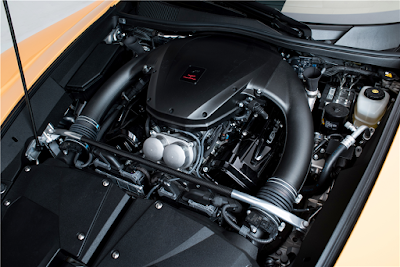
A screaming, naturally aspirated 4.8-liter V10 had a 9,000-rpm redline. It was capable of producing 560 metric horsepower and 354 lb-ft of torque backed by a 6-speed sequential transmission.
50 Nürburgring Packages were made, cementing it's place as the fastest, most exotic supercar Toyota ever made. The LFA went into production in late 2010, with a base price of US$375,000. This example has had just one owner, who has put just 1,600 miles (2,574 km) on it.
In January 2019 an as new 2012 Lexus LFA Nurburgring Edition with 54 miles on the clock sold for $885k.

Thursday, December 5, 2019

2020 McLaren 720S Spider

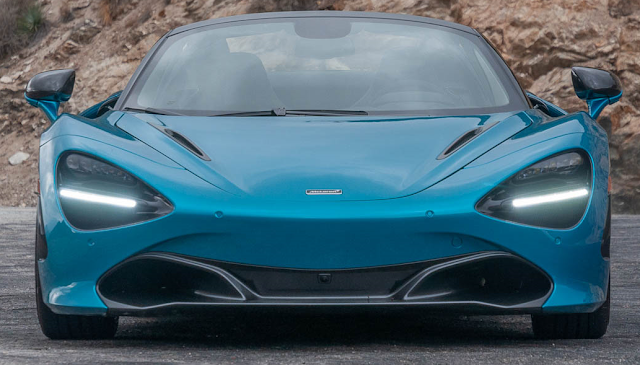
The Belize Blue paint job $5,270 is just one of the options. That total is $55,490 to be exact. The 720S Performance specification accounts for $12,130 alone; it adds a host of carbon-fiber parts. Other notable options include an electrochromic roof ($9,100) that tints darker to block out the sun, a $5,490 performance exhaust, and a Bowers & Wilkins 12-speaker audio system ($4,420). Base price is $319,450, this baby $375k.
McLaren packs the 720S with a 4 liter with twin turbochargers pushing 710 horsepower at 7,500 rpm and 510 pound-feet of torque through a 7-speed dual-clutch transmission. 0 to 60 mph comes in 2.8 seconds, with the quarter mile in 10.4 seconds.

1971 Lamborghini Miura P400 SV - $2.2m

Lamborghini started out building tractors. Ferruccio Lamborghini decided to build his own car in 1963, but it was the Miura that really put the Italian brand on the map. The Miura was the result of an unofficial effort by engineers to create a car to take on the best of Ferrari. One of the most sought after variants is the P400 SV.
A rolling chassis was displayed at the 1965 Turin Salon where it received a stellar reception. People were placing orders before even seeing a finished car. Bertone rushed together the styling project for the 1966 Geneva motor show.
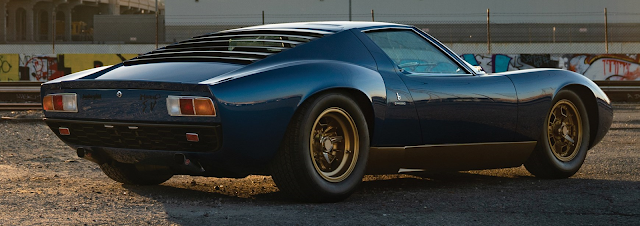
Lamborghini's flagship, the Miura received periodic updates and remained in production until 1973. The Lamborghini P400 SV was the final incarnation of the Miura and featured a revised 380hp V12 engine.

Just 150 SV models were produced when production ended in 1973.
Fully restored this example is a multiple award winner. It made $ 2.2m.

Wednesday, December 4, 2019

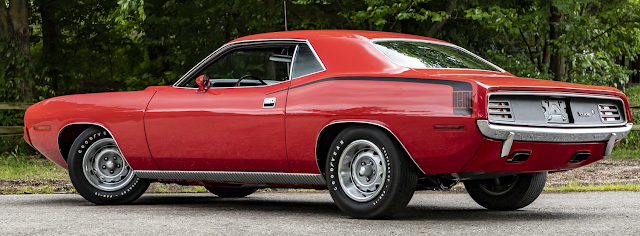
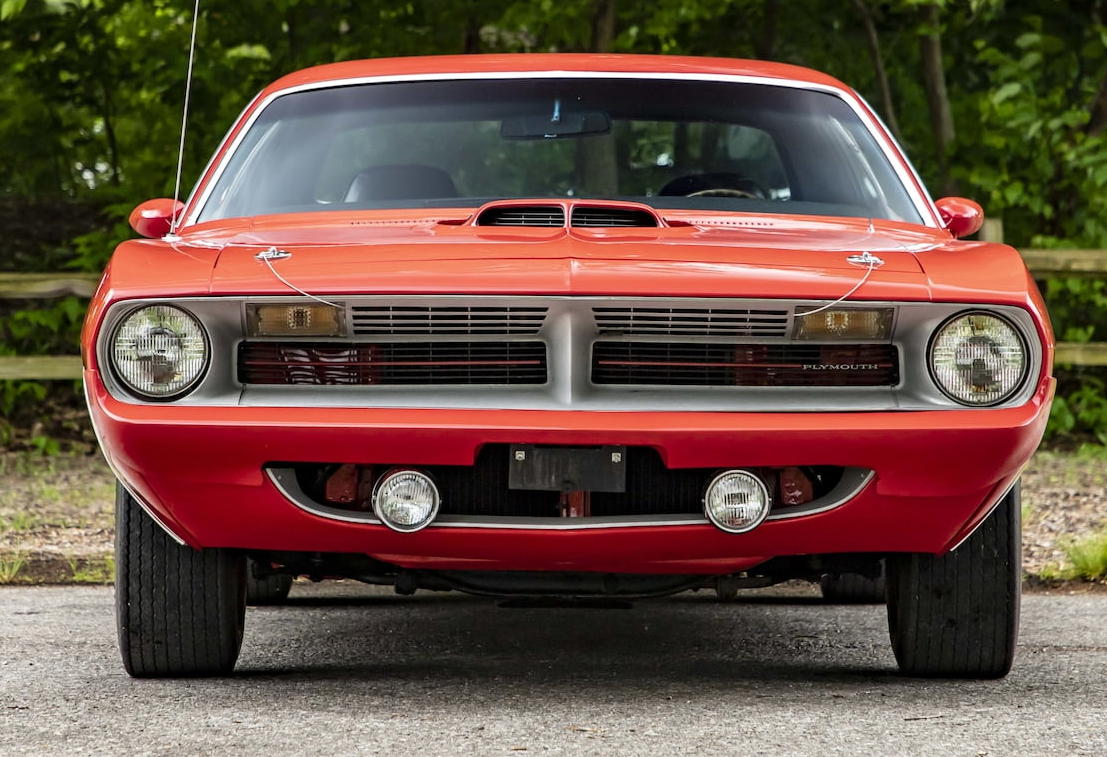
1970 Plymouth Hemi Cuda - $115k high bid

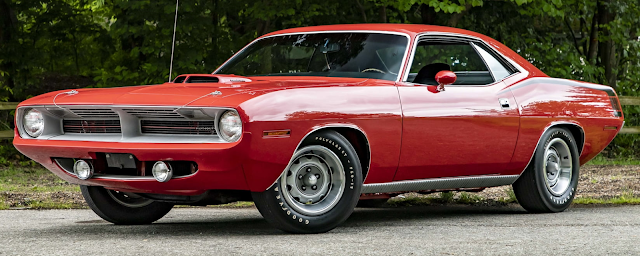
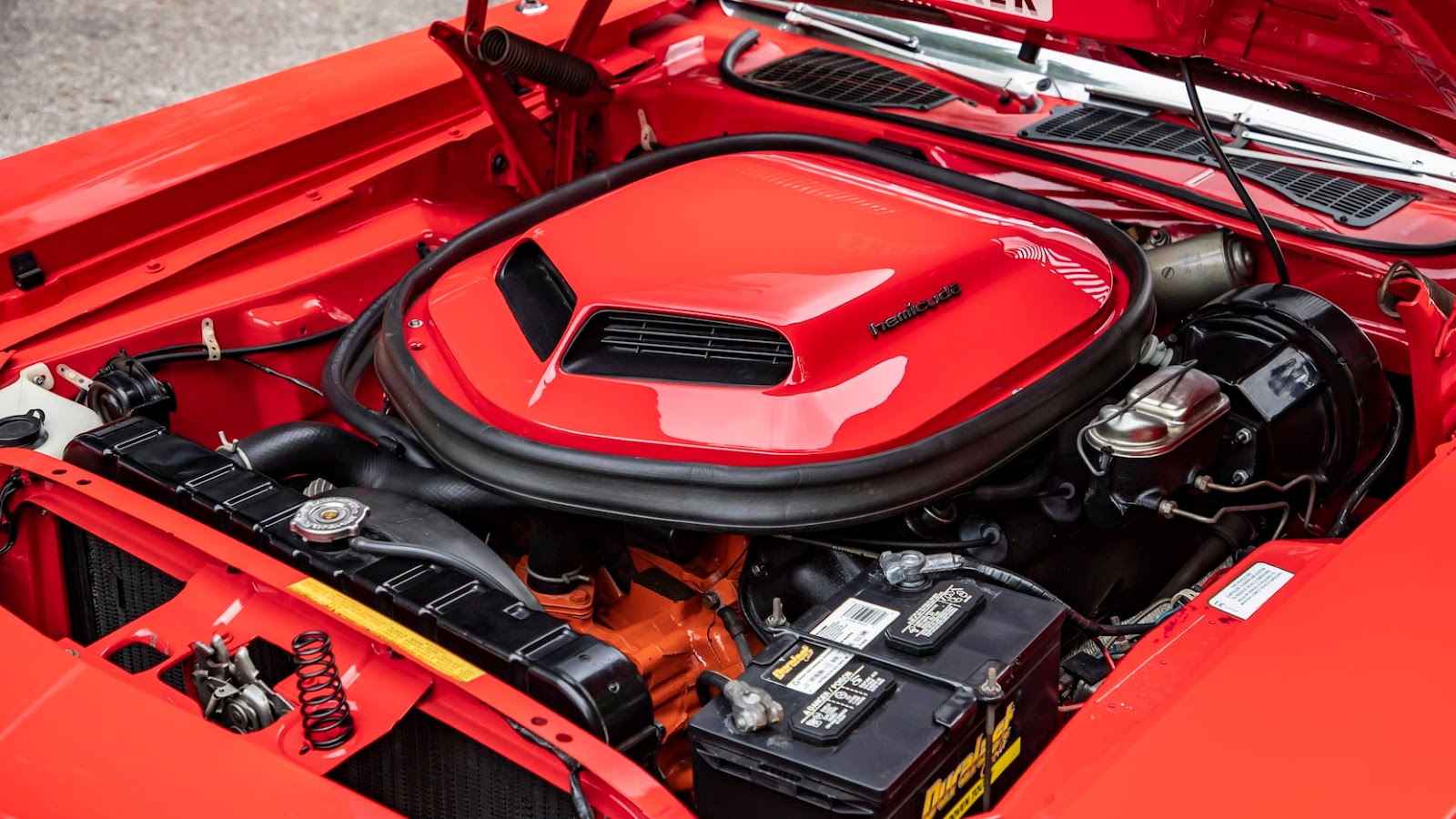
1 of 284 4-speed Hemi Cudas produced in 1970, 666 overall. Two year concours restoration completed in 1989. 1,032 miles since completion. 425 HP and 490 ft/lbs of torque. Dual Carter AFB carburetors. Rallye Red with Black Hockey Stick stripes. Super Track Pack. Power brakes. Shaker hood. Black bucket seat interior. Center console.
A 426 Hemi engine instantly made the regular production Hemi ‘Cuda the King Kong of pony cars. With an output of 425 hp, it was matched only by Chevy’s COPO Camaro 427. For the money, a significant $900, you got the 425-hp hemispherical V-8 engine fed by two four-barrel carburetors on an aluminum intake manifold. The Hemi was backed by either the TorqueFlite three-speed automatic or the A-833 four-speed manual.
Chrysler’s HEMI-powered coupe continued unchanged for the 1971 model year, which was to be the HEMI’s last year on the market. The automaker retired the 426 in 1972. Well-documented and outstanding examples can fetch in excess of $200,000, with low mileage cars known to sell for more than $400,000. This example high bid to $115k at Mecums.
All Hemi ‘Cudas received the Shaker hood, with its carburetor-mounted ram-air scoop poking up through a hole in the hood, thus “shaking” with the engine when it was running.
Visual features available for the HEMI Cuda included various decal sets and high-impact colors, including Lime Light, Tor Red, Lemon Twist, Vitamin C, In-Violet, Sassy Grass, and Moulin Rouge.

Tuesday, December 3, 2019

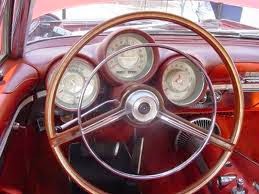
Destruction of the 1963 Chrysler Turbine Cars

Called “one of the greatest publicity stunts in automotive history,” the Chrysler Turbine car program ranks as one of the most unique automotive experiments ever.

By the spring of 1963, Chrysler’s experiments with turbine-powered cars were well known. Chrysler was the only automaker to take the next step and start to develop a turbine-powered car available to the public. In May of 1963, Chrysler not only introduced the Turbine car, it also announced that it would make 50 of the cars available for three-month-long test drives.
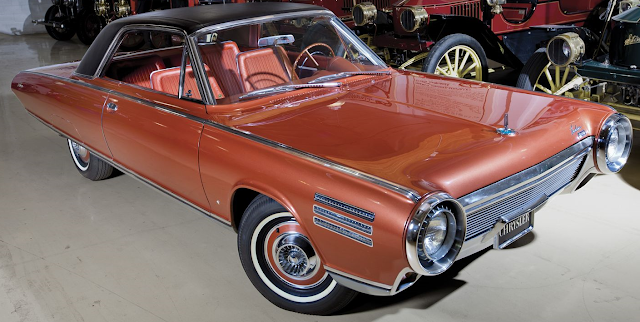
Turbine cars featured two-door four-passenger sedan bodies built by Ghia that shared nothing with any other Chrysler product.

Under the hood, they featured Chrysler’s fourth-generation A-381 regenerator turbine engine, good for 425-pound-feet of torque, hooked up to modified TorqueFlite three-speed automatic transmissions.

Aside from the five prototypes built by Ghia, all 50 came in the same configuration: bronze paint, black vinyl top, and bronze leather interior.

Acceleration proved to be no problem to the turbine driven cars (0 - 100 km/h in approx 10 seconds), but problems were experienced by drivers. These included fuel consumption (at best around 12 mpg) and cabin heat that was being generated by the turbine motor.
When Chrysler decided that it was never going to be a commercial proposition, they destroyed 40 of the prototypes, with the remaining 10 being given to museums.
"The decision to destroy the Turbine cars was pragmatic. Anything done outside of the control of the corporation could potentially create all sorts of PR headaches and diminish the good image effects from the program in the eyes of the public. Nobody wanted a bunch of those bodies running around with piston engines in them, etc., and they sure would not let them out of hand with the gas turbines still installed. Best and most logical decision – destroy them."
Jay Leno owns a Chrysler Turbine Car--one of only two running examples in private hands. Because he bought it directly from Chrysler, he is the first owner of the machine seen here: Number 34, according to a polished piece of trim located on the inner windshield.

Leno calls the Turbine Car "the most collectible post-war car ever."