Saturday, November 9, 2019

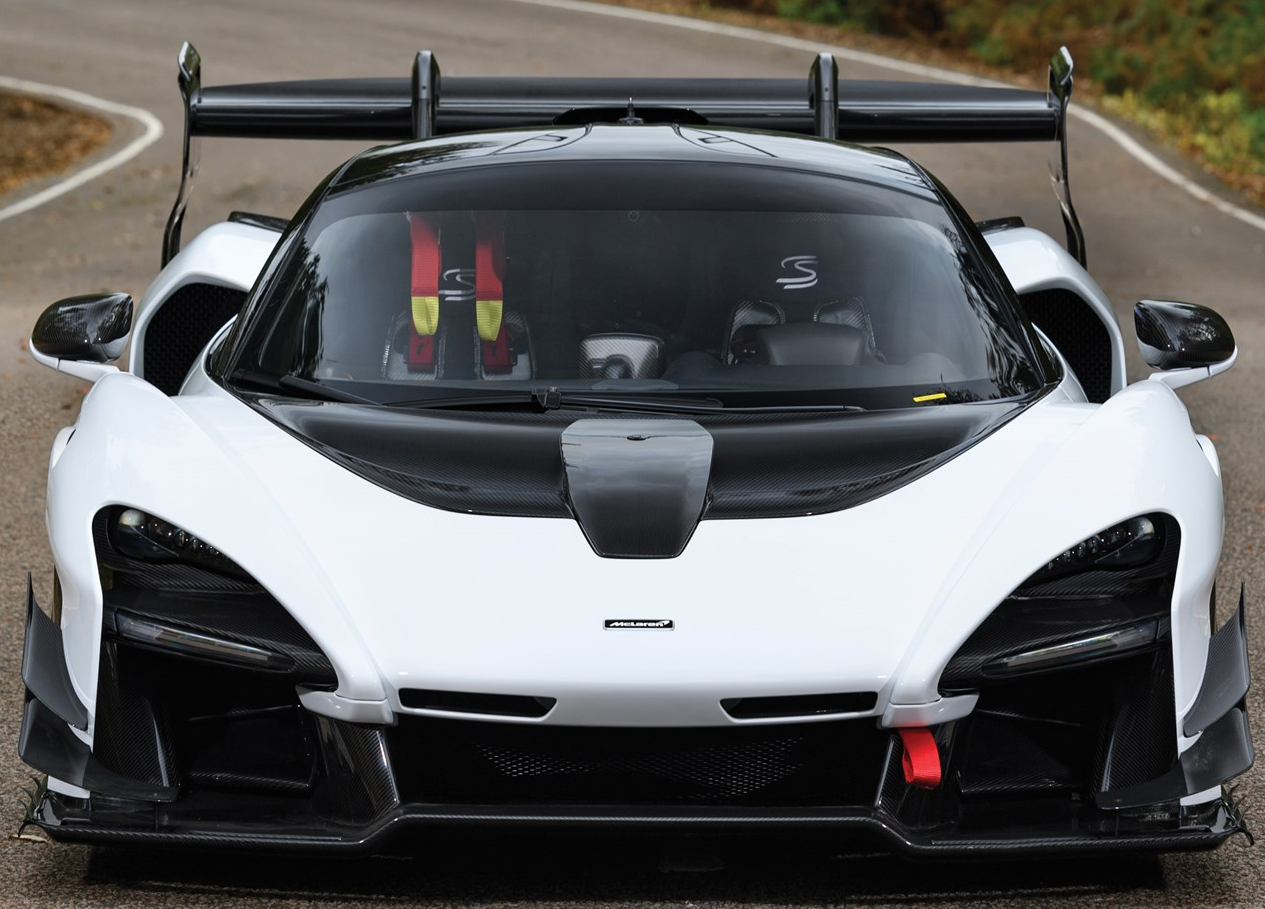
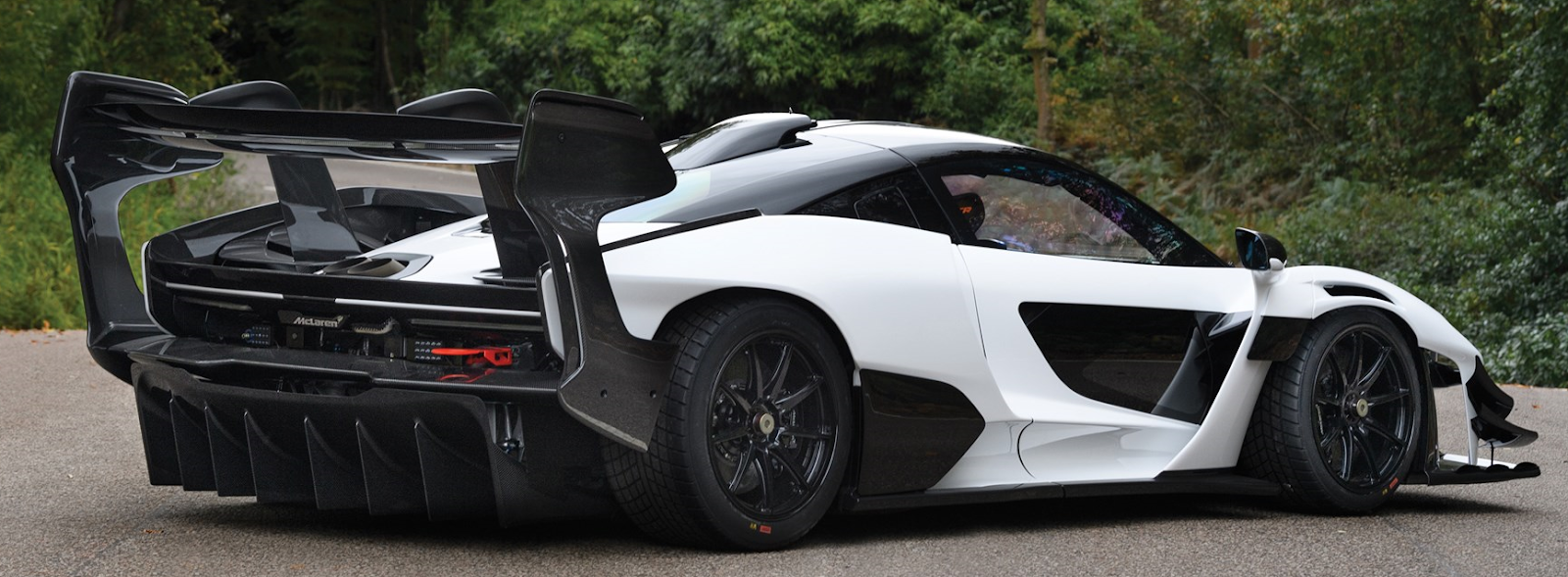
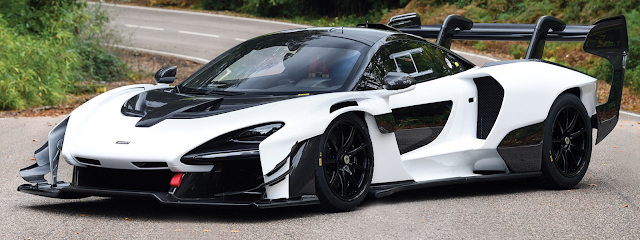
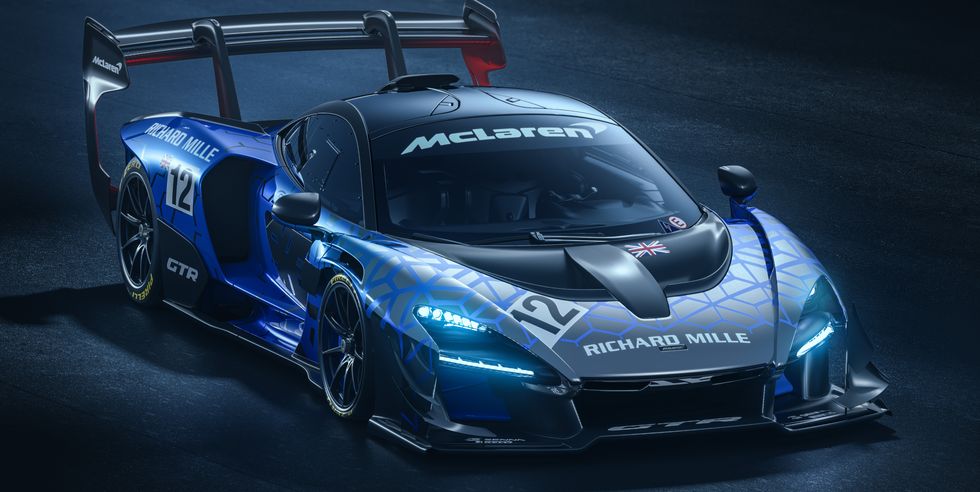
2019 McLaren Senna GTR

Engine is the M840TR 4.0-litre turbocharged V-8, featuring dry sump lubrication, lightweight materials for the rods and pistons, and a pair of ultra-low inertia, twin scroll turbo chargers. The GTR was never intended to be road-legal which helps free up more power, bringing that to 814 bhp and 590 foot-pounds of torque. 0–60 mph time is less than 2.8 seconds and a 0–124 mph time of less than 6.8 seconds.
75 are to be produced, and all have already been sold, despite a price that starts at around $1.2m.
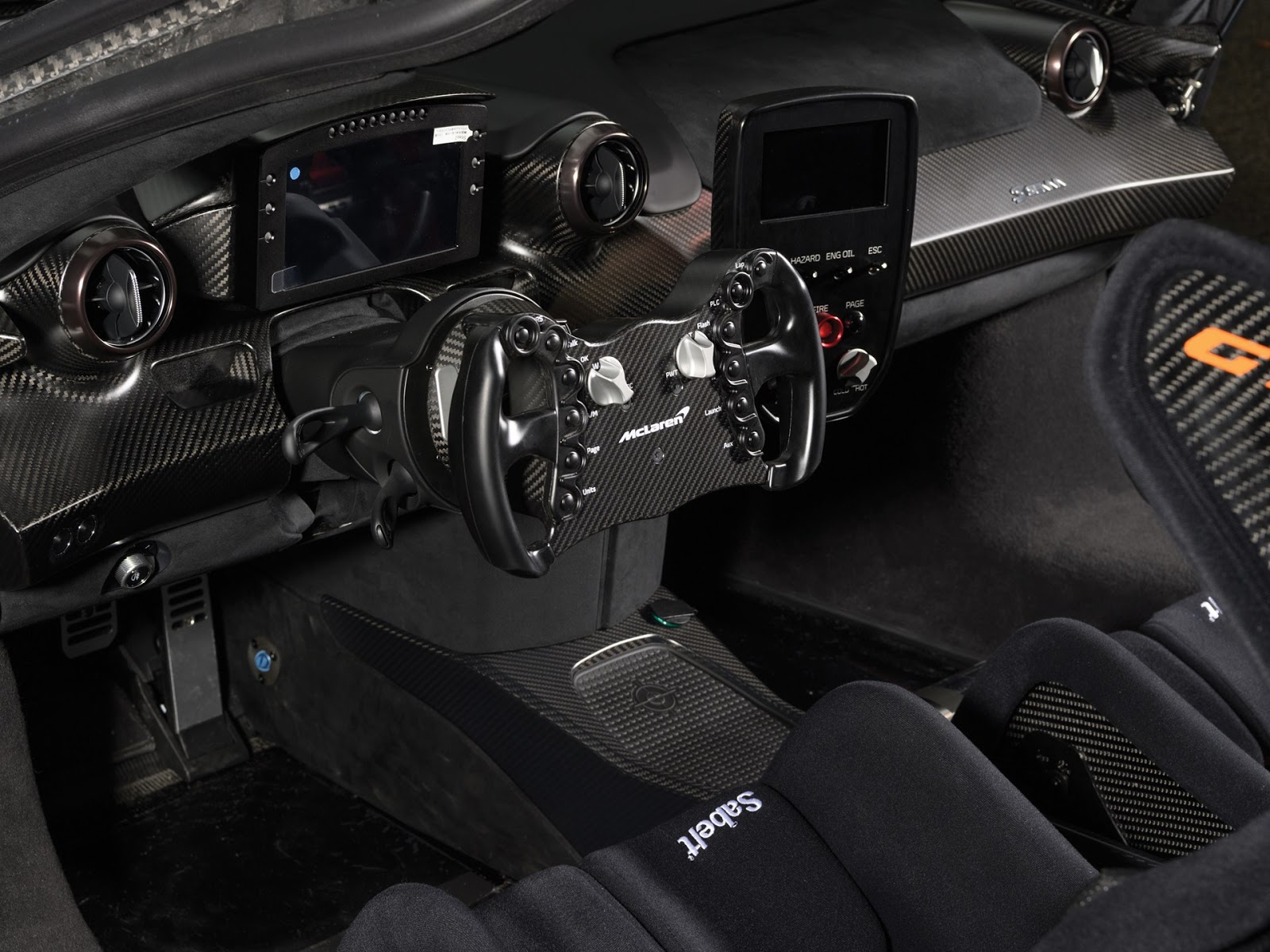
This example is offered for sale as a brand-new car with zero miles on the odometer. It carries an estimate of $1.5m to $1.7m

Friday, November 8, 2019

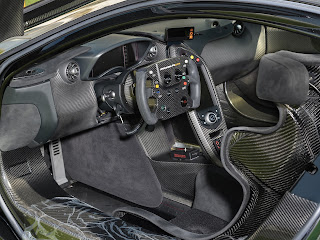
2016 McLaren P1 GTR

McLaren launched the P1 GTR at the 2015 Geneva Motor Show to celebrate the 20th anniversary of the McLaren F1’s victory at Le Mans. 1 of 58 examples built. The engine is a 3.8-litre V-8 featuring twin turbo chargers, aided by an electric motor. It fills the ‘torque-filling’ role to eliminate any form of lag whilst the turbos are off boost or spooling.
Total power output is 986 bhp, a figure almost identical to a Bugatti Veyron but with a far lower weight. This example was the first P1 GTR delivered to the United States.

It was specified in special-order Canepa Green, a custom shade which looks black in low light but reveals itself as a deep green in sunlight. This car is in factory-fresh condition and has never been used on the track.
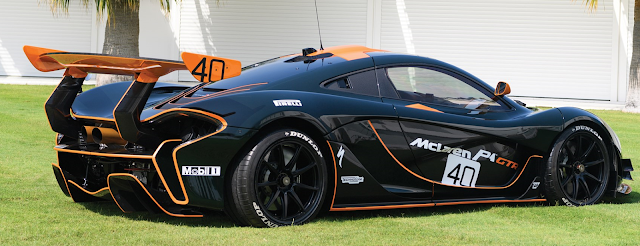
The car appears at Abu Dhabi and carries an estimate of $ 2.2m to $2.4m.

Thursday, November 7, 2019

1962 Ferrari 250 GT SWB Berlinetta by Scaglietti

In 1959, Ferrari introduced a short wheelbase 250 GT Berlinetta that offered quicker, more responsive handling, followed a year later by its California Spyder. The SWB Berlinetta got a newly designed body, with its styling drawn and executed more tautly and sharply over the shorter wheelbase. Four-wheel disc brakes — a first for a Ferrari road car — were fitted to the production cars. Extremely effective in competition, the SWB Berlinetta's results included a win and sweep of the first four places in the GT category at Le Mans in 1960.
Grand Tursimo — or Grand Touring — racing can be traced back to 1955, when GT became a class of endurance racing. This is what the 250 GT was designed for.

A long string of race victories followed the car's introduction, included the Tour de France from 1960 to 1962. The 250 GT SWB quickly became one of the finest dual-purpose GT cars from Ferrari.
The front lawn of every concours event is reserved for Ferrari royalty. That’s where you'll find the 1962 Ferrari 250 GT SWB.

This example had a high estimate of $10m. It made $9.6m
The SWB was built in a modest quantity of 165 examples, 91 of which were finished in the steel-bodied Lusso street-car configuration and 74 examples wore alloy for racing use.

In 2016 Gooding & Company offered a concours quality 1962 Ferrari 250 GT SWB with pre-sale estimate of $6m to $8m. It hammered for $7.6m.

Hagerty suggests a concours quality 1962 Ferrari 250 GT SWB Berlinetta with alloy bodywork is trending around $12m. It should be noted the red-hot market has cooled, very slightly. These cars will always remain a highly desired commodity.

2020 Lamborghini Aventador SVJ Roadster

Lamborghini introduced the new Aventador SVJ roadster at the 2019 Geneva motor show. The SVJ stands for "SuperVeloce Jota"

It packs a naturally aspirated 6.5-liter V-12 engine that delivers 759 hp and 531 lb-ft of torque. The engine is mated to a seven-speed single-clutch automatic transmission that spins all four wheels. Like the fixed-roof version, the roadster is touted as sprinting from 0-62 mph in 2.9 seconds and being capable of a top speed just over 217 mph.
The roof is removable and can be stored under the front hood.The Aventador SVJ Roadster employs a range of aero devices. The redesigned underbody sports vortex generators that work in conjunction with the front splitter and rear diffuser to improve downforce, while also reducing turbulence thanks to the airfoil and side winglets. The SVJ Roadster tips the scales at only 3,472 pounds.
0 to 62 mph takes only 2.9 seconds in the SVJ Roadster, only a tenth-second slower than the coupe. Hitting 124 mph takes 8.8 seconds, two tenths slower than the coupe.

800 examples will be offered globally with prices starting at a rock bottom $573,966.

Wednesday, November 6, 2019

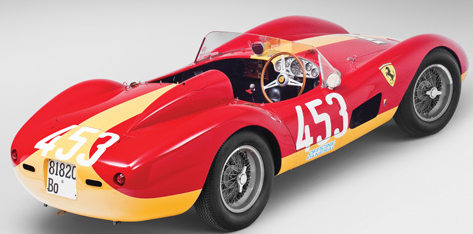
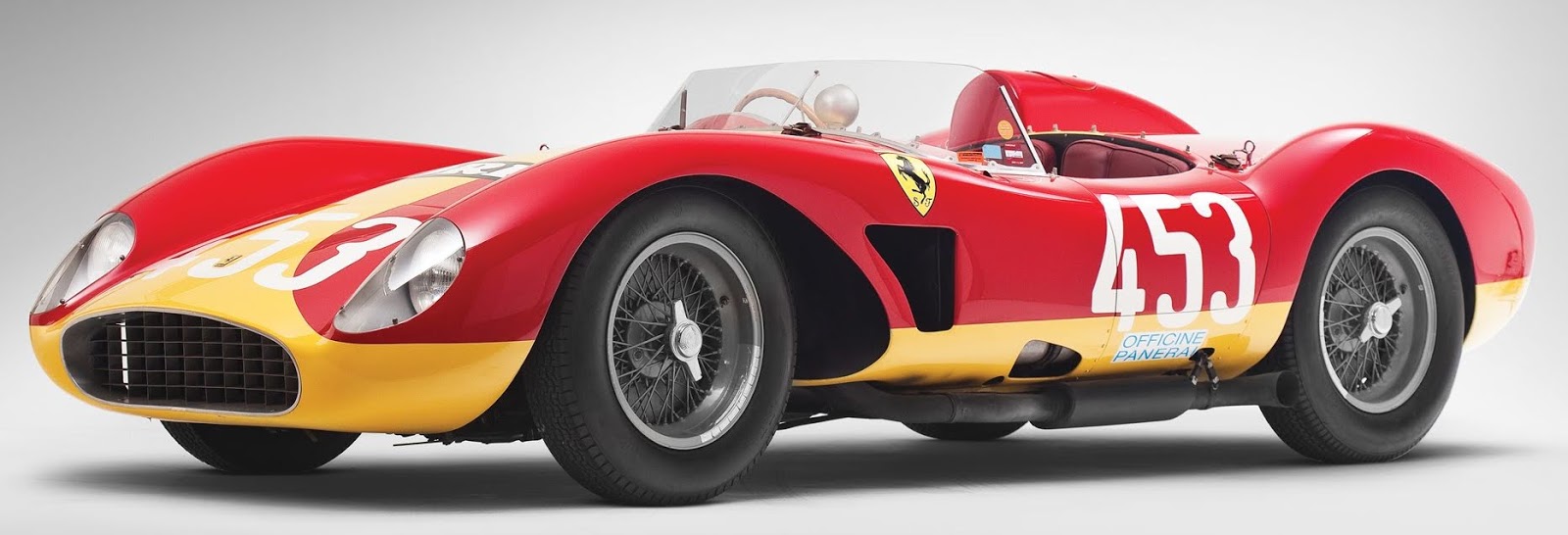
1957 Ferrari 500 TRC Spider by Scaglietti

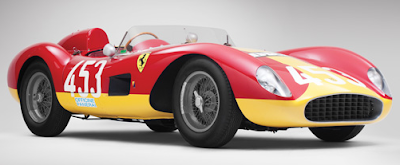
In 1955 a new team was formed by Ferrari for 1956. They soon came up with a new two-litre sports racing car: the 500 TR. This was the first Ferrari designated with the new name 'Testa Rossa'. The four-cylinder-engined type 500 TR was introduced in 1956 and was the successor to the 500 Mondial.
19 cars were produced. Less than twelve months after its introduction the 500 TRC was replaced by the 12-cylinder 250 Testa Rossa, which was produced in greater numbers. As the last four-cylinder sports racing car, the 500 TRC marked the end of an era at Ferrari.
This car was the 6th of 19 cars made. Chassis no. 0670 MDTR was sold new on 4 April, 1957. The car sold for €2,800,000 in 2011.

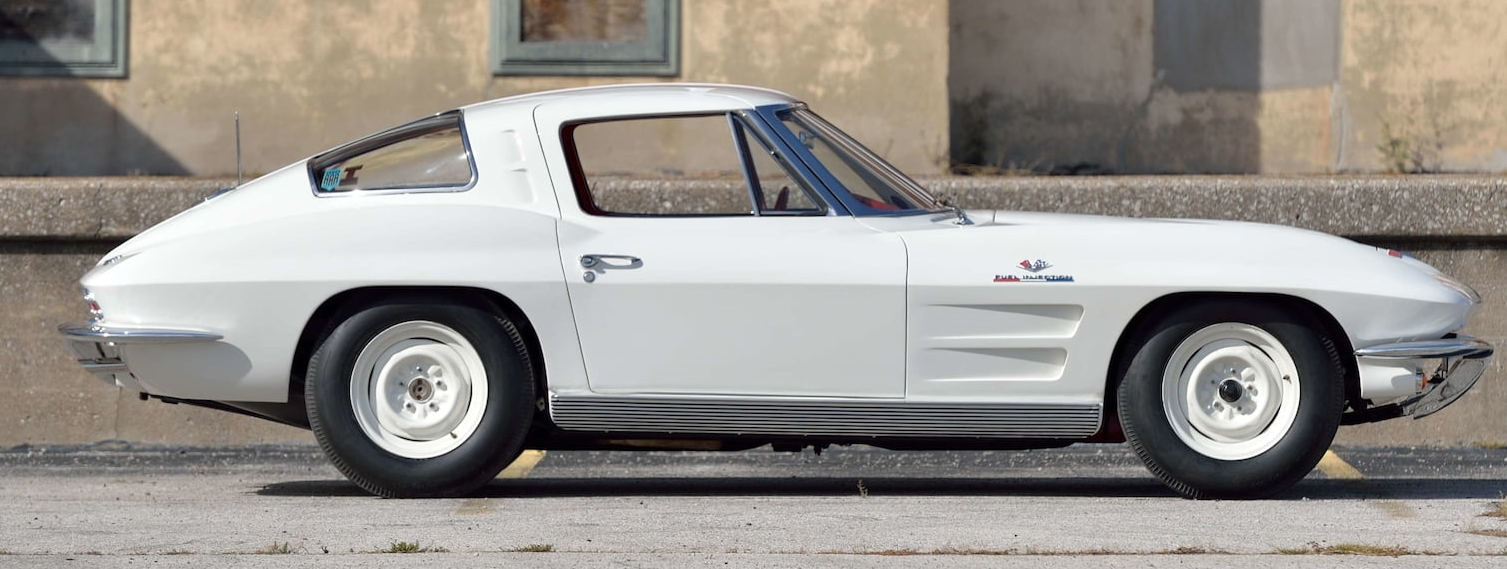
1963 Chevrolet Corvette Z06/N03 - $500k high bid

Stored in garage/barn for 51 years. Extensive body-off restoration completed in 2017. 1 of 63 produced with N03 36 gallon fuel tank. Z06 special heavy duty brakes and suspension. Original matching numbers 327/360 HP engine. 4-speed manual transmission.
The Z06 combined the most powerful Corvette engine, the L84 327/360 HP Rochester fuel-injected small-block V-8, with a mandatory close-ratio 4-speed manual transmission and 3.70 Positraction rear end.

Heavy-duty springs and shocks and a larger-diameter front sway bar were included, as were monster brakes. This 1963 Z06 coupe retains its original matching-numbers driveline.
An amazing barn find. Documented with the dealer invoice and deposit check receipt from 1965.
The car made a high bid of $500k against an estimate of $550,000 - $650,000

Tuesday, November 5, 2019

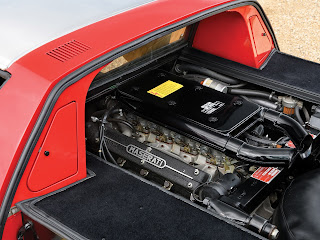
1974 Maserati Bora 4.7

When Citroën acquired Maserati in 1968, the first order of business was rejuvenation of its model lineup. The brand-new mid-engined Bora (Tipo 117) followed. The two-seat coupe was manufactured by Maserati from 1971 to 1978.

In common with other Maserati cars of the era, it is named after a wind, Bora being the wind of Trieste.
564 Boras were produced in total, 275 were fitted with 4.9L engines and the other 289 were fitted with a 4.7L. A US smog-qualified 4.9-litre engine was used starting with 1973 deliveries. The 4.7 L V8 produces 310 hp at 6,000 rpm and 325 lb⋅ft of torque at 4,200 rpm.

They were fed by four 42 DCNF/14 downdraught Weber carburetors with Bosch electronic ignition.
This rare RHD example had an extensive restoration and is finished in Rosso Fuoco over Bianco leather. It made $175k.