Saturday, September 28, 2019

1968 Chevrolet Yenko Camaro - $600k

Yenko Camaro YS-8021. One of 64 produced and less than 20 believed to still exist. Restored in 1989. This example, sold at Mecum’s Las Vegas auction, is the most expensive Yenko Camaro ever sold at auction.

COPO 9373 Sports Car Conversion Package. M21 4-speed transmission. Power disc brakes. Stewart Warner tachometer and gauges. Multiple award winner.
Yenko swapped out the factory-installed L78 396/375 HP big-block for a L72 427/425 HP.
The car made $ 600k in 2017
In 2007 a nifty 1968 Chevrolet Yenko Camaro made $ 187k. In 2013 the number was $500k at Mecum for a 1968 Rally Sport. 1 of 11 built.
These vehicles are at the very top of the investment ladder.

Friday, September 27, 2019

Dodge - To Serve and Protect

The Dodge Durango Pursuit has a 3.6L Pentastar® V6 Engine Or 5.7L HEMI® V8 Engine. Standard all-wheel drive. Performance-tuned, load-leveling suspension. Eight-Speed automatic. 7,200-Pound maximum towing capability. Ready Alert Braking Three-Zone Automatic Temperature Control.
Dodge Durango Special Service has an eight-speed automatic transmission. 5.7L Hemi® V8.

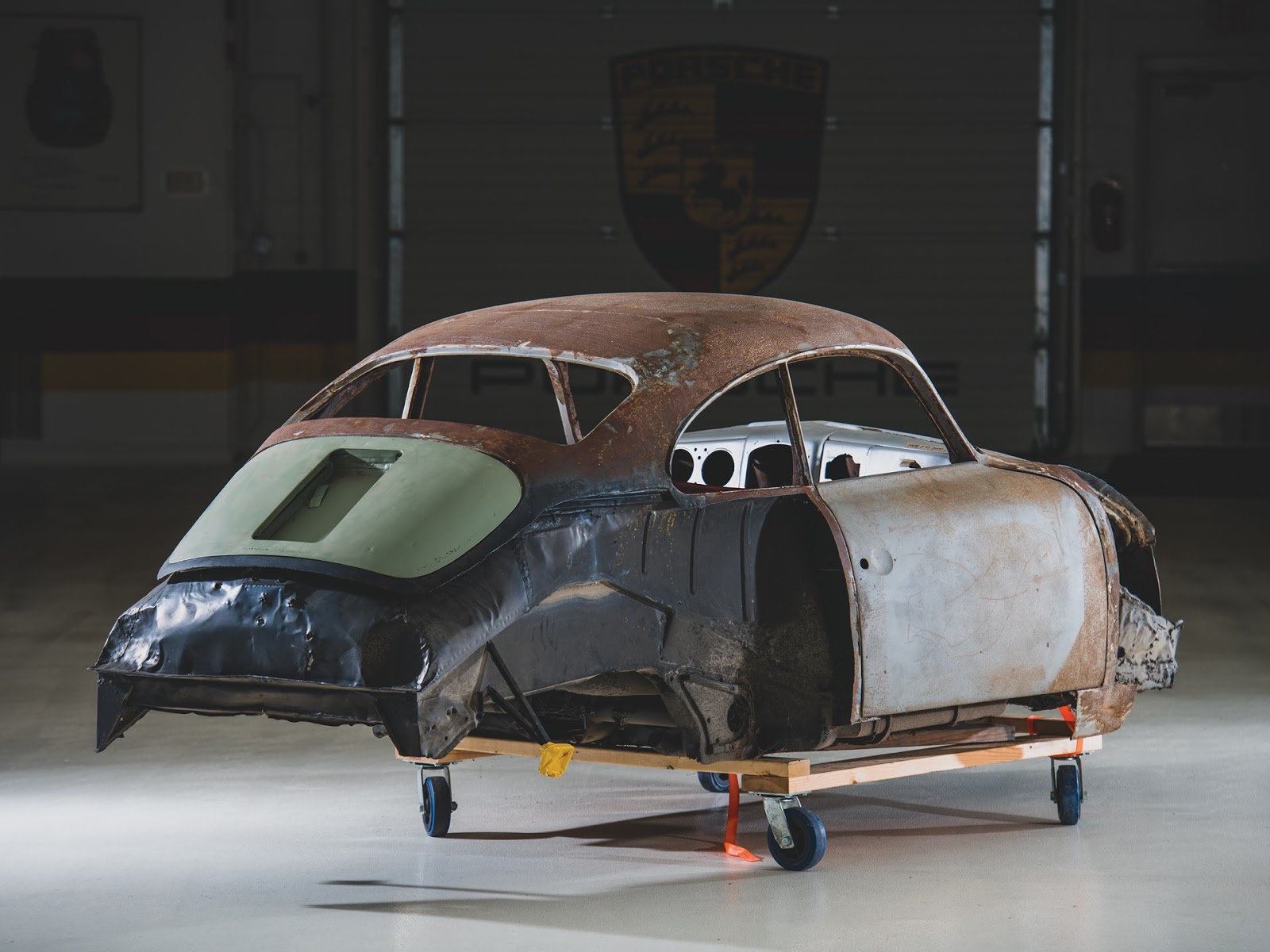
1951 Porsche 356 Split-Window project - $100k+

In 1950, the still-tiny German automaker launched by Dr. Ferdinand Porsche was two years into producing a new automobile. While it utilized many components from the Volkswagen Beetle, it would meet his definition of what a sports car should be. Although the Type 356-001 was a one-off mid-engined roadster, the 356/2 coupes of 1948–49 were rear-engine, their body shells hand-hammered of light alloy sheet over a wooden buck in an old Austrian sawmill. These little coupes would help establish a legend.

One of just 749 1951 Pre-A “five-digit” Reutter coupes built. Rare and desirable.
The first 356s featured a 1,131cc engine of 35 hp, meaning the first 356s had to be as light as possible. The bodies were crafted initially from light alloy. The early 1950s were good times for the expanding family-owned company, demand for the 356 soared.
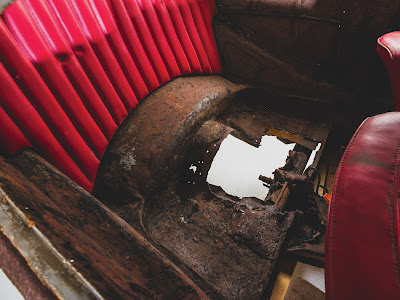
The car was simple in design and straightforward to produce. This project car carries a low estimate of $100k.

Thursday, September 26, 2019

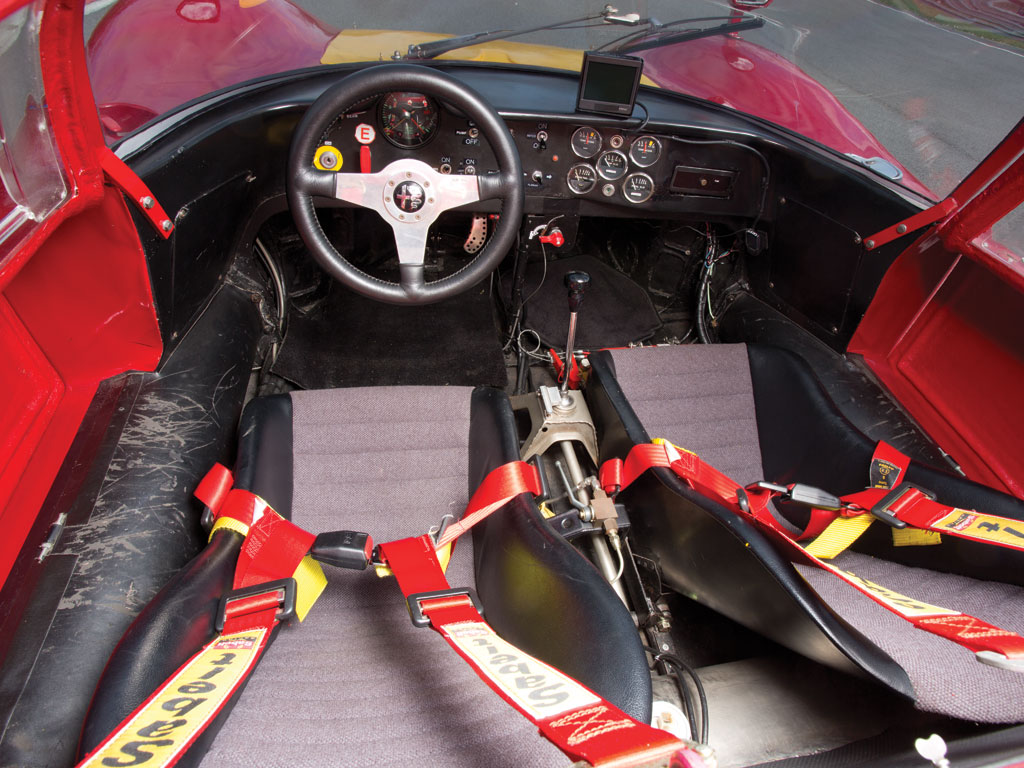
1968 Alfa Romeo T33/2 ‘Daytona’

Alfa Romeo had great success throughout the early 1960s in various touring and GT races. The decision was made to return to international sports car racing. The heart of Alfa’s return would be the two-litre V-8 engine. This effort would encompass 11 racing seasons and result in Alfa winning the World Championship in 1977.

The Daytona featured a high revving 270 bhp, 1,995 cc DOHC V-8 engine with dual-ignition and indirect fuel injection, six-speed gearbox, independent front and rear suspension, rear-wheel drive, and four-wheel disc brakes.
In 2014 a 1968 Alfa Romeo T33/2 ‘Daytona’ changed hands for €1,260,000.

Tuesday, September 24, 2019

1971 Dodge Hemi Charger R/T - $181k

1 of 63 Hemi Charger R/Ts produced in 1971. 1 of 12 produced for the Canadian market. 1 of 30 Hemi 4-speed Charger R/Ts for 1971. Matching numbers drivetrain. 426 Hemi V-8 engine. Dual 4-barrel carburetors. Hemispherical cylinder heads. Dual exhaust. A833 4-speed manual transmission. Dana 60 Super Track Pack with 4.10 rear axle. Power steering. Power brakes. Ramcharger hood with hold-down pins. B5 Bright Blue Metallic with Black R/T striping. Front and rear spoilers. Blue vinyl bucket seat interior. Hurst Pistol Grip shifter.
A final year Hemi Charger R/T is a prime collectible. In a model season that saw just 63 Hemi Charger R/Ts produced overall, this car is a top-notch example with the legendary 426 Hemi V-8 engine, dual 4-barrel carburetors, hemispherical cylinder heads, high-flow dual exhaust and heavy-duty suspension and cooling equipment. Coded A34 for the Super Trak Pak, this Charger has the highly desired performance-engineered A833 4-speed manual transmission coupled to a 4.10 Dana 60 Sure Grip rear axle.
When the 426 Hemi was introduced in 1964, it was strictly a racing engine. That year, four Hemi-powered Mopars swept the Daytona 500, finishing 1-2-3-4. It caught the racing world by surprise, and prompted NASCAR to impose stricter production rules on Chrysler. Instead of producing a few blueprinted Hemi motors each production year, they would have to produce several thousand and sell them in street-legal cars. Four bolt mains were standard on every 426 Hemi, street or race.

The motor was essentially ruled out of NASCAR in the 1970s, and emissions laws, production costs, and insurance surcharges ended the street version after 1971.
A true muscle classic, the car made $181k

Monday, September 23, 2019

Ford Mustang #1

55 years after a salesman sold the first Ford Mustang built he will be reunited with it at the Henry Ford Museum in Dearborn, Michigan.

Prior to the official launch of the Ford Mustang in 1964, car dealerships were sent a preproduction vehicle to display. They weren't intended to be sold to customers. But one mistakenly was, the very first Mustang was purchased by a pilot in Newfoundland.

It was the salesman's easiest sale. Capt. Stanley Tucker saw it on the side of the road after it was unloaded. "He looked at it and said, 'It's mine.'" The car sold for $4,300 Canadian.
The official launch date for the Mustang was April 17, 1964, but Tucker bought his on the 14th. Preproduction vehicles are basically practice cars for workers assembling them. Complete with crooked panels and missing details, the car was supposed to be returned to Ford. Tucker made a deal with the dealership that he'd buy it but let it stay on the lot for display for a couple of weeks.

"We moved the car into the showroom that day," Phillips said. "He came in every day to check it out and make sure no one did anything to it."
It took Ford two years of negotiating to get the vehicle back. In exchange, Ford gave him the one-millionth -- a fully loaded 1966 model. Phillips made a career of selling cars and retired in 1995, having never again seen the Mustang he mistakenly sold in 1964. This week he'll finally get the opportunity to see it again as a VIP guest.

A 64 1/2 Mustang, a very early production car (perhaps pre-production) was given to the producers of the Bond film Goldfinger in 1964 for promotion purposes. It's the very first appearance of a Mustang in a movie.

2001 BMW Z8 - high mileage = €165k

Bursting onto the world stage after a starring role alongside Pierce Brosnan in the Bond film 'The World is Not Enough', BMW’s Z8 was the company’s new halo car.

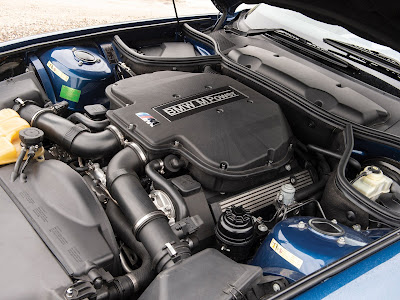
Powered by the celebrated BMW S62, it produced 400 bhp. In 2011 the original engine of this example was replaced at 155,067 km. Since then another 6,000 km has been added. The Z8 is a HIGHLY desired commodity.
Between 2000–2003, 5,703 were produced with 2,540 destined for America. The Z8 cost US$128,000, had an all-aluminum chassis and body, and used a 4,941 cc (4.9 L; 301.5 cu in) V8 engine. Transmission is a 6 speed manual.
The Z8 has it all ... limited production, eye-catching looks and superior performance.
This example made €165k in October.

1968/69 Chevrolet Corvette Stingray L88 Convertibles

Behold bookend examples of the holy grail of corvettes the L88.

The race-derived L88 427-cubic-inch V-8 was a high compression big-block engine with aluminum heads, high-capacity four-barrel carburetor, bespoke induction, and domed hood hiding a monster pushing 430 hp. 118 were built in 1969, 80 in 1968.
Armed with the L88, the Corvette could vault to 60 mph in 4.2 seconds and needed just four more seconds to reach triple digits.

Both cars remain unsold. They both carried an estimate of $475k to $575k.

Sunday, September 22, 2019

1962 Chevrolet Corvette Big Brake Tanker

1 of 246 produced with heavy duty brakes and special suspension. Comprehensive restoration. Extensive race history in California and Arizona. Southern California Car Club member. Fuel injected 327/360 HP V-8 engine. Finned aluminum valve covers. 4-speed manual transmission. 4.11 Positraction rear end. Quick steering. 24-gallon fuel tank. Roman Red with Black interior. Removable hardtop.
The optional Heavy Duty Brakes and Special Steering package included special shock absorbers, finned brake drums, internal cooling fans fed by air scoops and deflectors on the front brakes and air scoops on the rear.

Corvette features the Rochester fuel-injected version of the 327 CI small-block V-8 with the requisite 4-speed manual transmission and Positraction rear end.
Presented exactly as raced, this prominent SoCal Big Brake Fuelie Tanker was featured on the cover of “Vette Magazine.”


The car made a high bid of $190k and failed to change hands. It carried an estimate of $ 200k to $250k.